Could Earth Be Purple?

Declan Kennedy
| 17-07-2026
 · Science Team
Green dominates the landscapes of modern Earth, making it easy to assume that it has always been the defining color of life.
The widespread presence of chlorophyll-based photosynthesis has shaped forests, grasslands, and countless ecosystems for hundreds of millions of years. However, one fascinating scientific hypothesis suggests that Earth's earliest biological communities may have looked very different.
Known as the Purple Earth Hypothesis, this idea proposes that primitive microorganisms using a different light-harvesting system may have flourished before chlorophyll-based life became widespread. Although the hypothesis has not been proven, it offers an intriguing perspective on the evolution of life and expands the possibilities for discovering life beyond our planet.
A quiet phase of release and reflection!
Discover how space tourism is shaping the future of travel beyond Earth.
Essential tips to help beginners pick the perfect camera for their needs.
Discover how stars are born, live, and die, and what scientists are learning.
How renewable energy is driving next-gen hydrogen production.
Discover How Humanoid Robots Are Revolutionizing Our Homes, Workplaces, and Daily Lives—The Future Is Already Here!
The Core Idea: A Different Solar Strategy
The Purple Earth Hypothesis proposes that, before green plants and algae became widespread, Earth's surface may have appeared more purple than green. This coloration would not have come from plants or flowers but from microscopic organisms that used retinal-based pigments instead of chlorophyll to capture sunlight.
Chlorophyll absorbs primarily red and blue wavelengths of light while reflecting much of the green spectrum, which is why most plants appear green. In contrast, retinal-based pigments absorb green light efficiently and reflect red and blue wavelengths, giving the organisms that contain them a purple appearance.
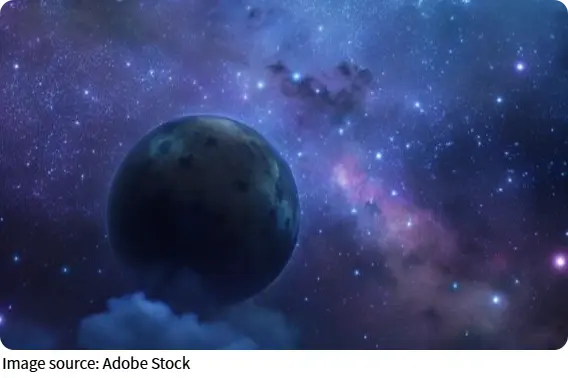
Scientists suggest that if retinal-based phototrophy evolved before chlorophyll-based photosynthesis became widespread, these microorganisms could have contributed to a more purple-looking early Earth. However, this remains a scientific hypothesis rather than an established fact, and researchers continue to investigate the conditions under which early life evolved.
The Chemical and Evolutionary Foundation
The Purple Earth Hypothesis is supported by differences in how organisms capture and use light energy. Chlorophyll-based photosynthesis is a complex biological process that ultimately releases oxygen into the atmosphere. By contrast, retinal-based phototrophy is a simpler light-powered system that generates cellular energy without producing oxygen.
Because Earth's earliest atmosphere contained very little oxygen, scientists have suggested that retinal-based phototrophy may have been well suited to some ancient environments. Rather than proposing that purple microorganisms definitely dominated the planet, the hypothesis explores one possible evolutionary pathway among several that may have existed during Earth's early history.
As oxygen-producing microorganisms became increasingly abundant, Earth's atmosphere gradually changed, creating conditions that favored chlorophyll-based life. Today, microorganisms that use retinal-based pigments continue to thrive in certain extreme environments, demonstrating that this biological strategy remains effective under specific environmental conditions.
Looking Beyond Earth
One of the most significant aspects of the Purple Earth Hypothesis is its relevance to the search for life beyond Earth.
When scientists study distant planets, they often look for atmospheric gases and patterns of reflected light that may indicate biological activity. The hypothesis suggests that extraterrestrial life may not rely on chlorophyll or produce the familiar green signature observed on Earth. Instead, different pigments could evolve depending on the light emitted by a planet's star and the environmental conditions on its surface.
By considering a wider range of possible biological signatures, researchers can broaden the search for life beyond our planet. This approach encourages scientists to remain open to forms of life that may differ significantly from those found on Earth.

The Purple Earth Hypothesis provides a thought-provoking perspective on the possible appearance of Earth's earliest ecosystems and the many ways life can adapt to different environments. Although it remains an active scientific hypothesis rather than a confirmed historical event, it highlights the remarkable diversity of biological solutions that evolution can produce. By challenging familiar assumptions about the color and chemistry of life, this idea encourages a broader understanding of biology and supports a more open-minded search for life elsewhere in the universe.