Chicago, The Windy City

Ethan Sullivan
| 28-04-2026
 · Travel Team
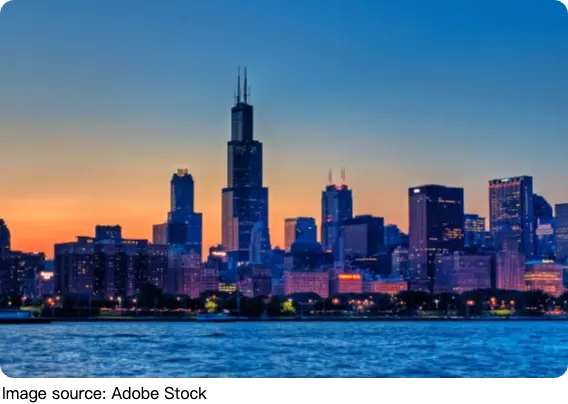
Few American cities deliver that first-arrival punch quite like Chicago. You step out of O'Hare, take the Blue Line "L" train downtown, and somewhere around the approach to the Loop you get your first real look at that skyline, all glass and steel stacking up against the lake, towers that architects from around the world essentially use as their personal portfolio.
Chicago is a city that takes its buildings, its food, and its sports very seriously, and that seriousness makes it one of the most genuinely rewarding cities in the country to spend a few days exploring.
Chicago
Getting There and Getting Around
Chicago is served by two airports. O'Hare International Airport (ORD) handles the majority of flights including most international routes. Chicago Midway Airport (MDW) is smaller and used heavily by budget carriers — worth checking if you're flying Southwest, Spirit, or Frontier. From O'Hare, the Blue Line "L" train runs directly downtown in around 45 minutes for $2.50 per ride, making it one of the easiest airport-to-city connections in the US.
Most Tourists Go to Bed at 10PM — Here's Why Tokyo Nights Are Actually the Best Part!
The Secrets Behind London’s Most Famous Clock Revealed
Yellowstone's electric-blue thermal pools sit above a supervolcano — and they're more surreal up close.
Croatia's most stunning national park has 16 turquoise lakes connected by waterfalls — and it's worth the crowds.
This Norwegian peak above the Arctic Circle has the sharpest summit view in Scandinavia — and few tourists know it.
Deep Kyoto Secrets: The Hidden Water District That Will Change Your Perspective!
Once you're in the city, the CTA transit system — covering "L" trains and buses — handles everything efficiently. A single ride costs $2.50 for the train or $2.25 for the bus. A one-day unlimited pass runs $5, a three-day pass $15, and a seven-day pass $20. For most visitors, the three-day pass hits the sweet spot.
Top Attractions and What They Cost
Millennium Park is free and absolutely worth several hours. Cloud Gate — the giant reflective bean-shaped sculpture that's now one of the most photographed objects in America — sits right in the park along with the Crown Fountain and the Jay Pritzker Pavilion, which hosts free outdoor concerts in summer.
The Art Institute of Chicago charges around $25 per person and holds one of the finest collections in the country, with the Impressionist galleries and the original trading floor architecture both worth the price of entry on their own. The Skydeck at Willis Tower — on the 103rd floor, with glass boxes that extend out over the street below — starts at $32 for general admission and delivers the most spectacular city panorama in the Midwest.
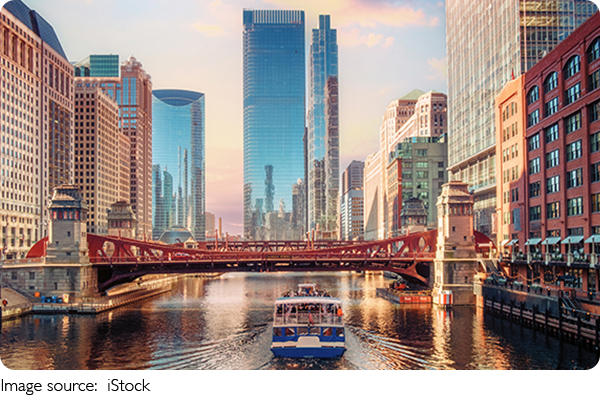
For an architecture boat tour along the Chicago River, budget around $40 to $50 per person for a 90-minute guided trip — genuinely one of the best ways to understand the city and its building history. Lincoln Park Zoo is completely free, which makes it an easy half-day add-on for families.
If you're hitting multiple paid attractions, the Chicago CityPASS bundles three to five of them at prices between $102 and $139, which saves meaningful money over individual tickets.
Best Time to Visit
Late spring through early fall — May, June, and September in particular — delivers the best combination of pleasant weather and manageable crowds. July and August are peak season with the highest hotel prices and the most visitors. Winter brings genuinely harsh conditions but also the lowest accommodation rates and uncrowded museums, which suits some travelers perfectly well.
Where to Stay
Hostel dorm beds in well-reviewed properties like HI Chicago or Chicago Getaway Hostel run around $35 to $50 per night. Budget and mid-range hotels in the Loop and Near North neighborhoods — the most convenient base for first-time visitors — range from $100 to $200 per night. Luxury hotels in the same central areas start around $250 and climb well beyond $400 during summer. Moving a neighborhood or two north to Lincoln Park or Lakeview typically saves 20 to 30% on accommodation while keeping you connected to good transit and some of the city's best restaurants.
Chicago is the kind of place that keeps surprising you the longer you stay. Give it at least three full days, and you'll leave wondering why you didn't book five.