Squirrel Food Storage

Owen Murphy
| 26-08-2026
 · Animal Team
Hello, Lykkers! Have you ever seen a squirrel bury an acorn and quickly run away?
This simple action is actually a clever survival strategy for storing food before winter arrives.
Squirrels hide thousands of nuts in different places, but with so many hiding spots, how do they remember where their treasures are buried?
The answer is a combination of powerful memory, sharp senses, careful organization, and even a little bit of food theft.

Squirrels Create Thousands of Hidden Food Stores
Many tree-dwelling squirrels, including the familiar eastern gray squirrel, use a strategy called scatter-hoarding. Instead of keeping all their food in one location, they spread individual nuts and seeds across a wide area. This method reduces the risk of losing their entire winter supply if another animal discovers one storage spot.
Why Declining Bee Populations Affect More Than Farms: Food Supply, Prices, and Nutrition
A close look at how hedgehogs manage food, shelter, traffic, and daily survival in urban spaces
How tiny wings keep a hummingbird still in the air, and why that takes such a huge energy budget
How emperor penguins rotate in freezing huddles to share warmth and survive harsh Antarctic cold
Their color shifts are mainly about signaling, temperature control, and light, not simple camouflage
Why the Octopus Has Three Hearts and Blue Blood: A Marvel of Marine Evolution
During the months before winter, squirrels may collect and hide thousands of nuts. Each small cache becomes a future meal waiting beneath the soil, inside tree cracks, or in other protected locations. A squirrel’s territory can cover several acres, meaning it must remember countless separate hiding places.
This behavior requires much more than simple instinct. Scientists have found that squirrels create detailed mental maps of their surroundings. They remember landmarks such as trees, rocks, bushes, and other features that help them return to specific locations months later.
Their Memory Works Like a Natural GPS
For a long time, people joked that squirrels forget most of their buried nuts. While some forgotten seeds may eventually grow into plants, research shows squirrels are actually excellent at recovering their stored food. Studies on gray squirrels have revealed that they can successfully locate a large percentage of their hidden supplies.
Their memory does not depend on just one clue. Instead, they combine several pieces of information, including location, smell, and visual markers. Scientists have tested squirrel memory by creating fake hiding places that looked similar to real nut caches.
Even when researchers changed the surrounding environment or added familiar scents, squirrels usually ignored the false locations and returned to the areas where they had actually stored food. This suggests that squirrels rely heavily on spatial memory rather than simply following smells.
Their ability is especially impressive because they may return to a cache weeks or even months after hiding it.
Smell Helps, But Memory Does the Heavy Work
A squirrel’s nose is an important tool, but it is not the only reason they succeed. Nuts buried underground can lose their scent over time, especially after rain, snow, or changes in soil conditions.
Instead, smell works together with memory. A squirrel may recognize the general area where a nut was hidden and then use scent to locate the exact spot. Their sharp sense of smell can also help them identify whether another squirrel has recently disturbed a cache.
Their eyesight also plays a role. When squirrels bury food, they often use surrounding objects as reference points. A particular tree trunk, fallen branch, or patch of vegetation can become part of their internal map. This combination of senses allows squirrels to navigate their environment with remarkable accuracy.
Squirrels Also Keep Track of Other Squirrels’ Food
Finding their own nuts is only part of the challenge. Squirrels are also aware that other members of their species are doing the same thing. Food theft, known among researchers as pilfering, is common among squirrels.
A squirrel watching another squirrel hide food may remember that location and return later to steal the stored nut. Because of this constant competition, squirrels have developed clever behaviors to protect their supplies.
Sometimes a squirrel performs a fake burial. It may dig a hole, pretend to place a nut inside, and cover the empty spot while secretly keeping the food in its mouth.
This deceptive behavior can confuse nearby observers who may be waiting for an opportunity to steal. The squirrel’s memory is not only about remembering “Where did I hide my food?” It can also involve remembering “Where did another squirrel hide theirs?”
Different Squirrels Use Different Storage Strategies
Not all squirrels organize food in the same way. Scatter-hoarding species, such as gray squirrels, create many separate caches across their habitat. This approach makes their food harder for thieves to find.
Other species, including some red squirrels, use a different method called larder-hoarding. Instead of hiding individual nuts everywhere, they collect large amounts of food in one protected location, such as a tree cavity.
This storage style requires defending a single food supply rather than remembering thousands of separate hiding spots. The choice depends on the squirrel species, habitat, and available food sources.
Forgotten Nuts Help Forests Grow
Although squirrels are skilled at recovering their hidden meals, they do not find every single nut they store. Some caches remain untouched because squirrels die, forget a location, or simply have more food than they need.
Those forgotten nuts can become new trees. Acorns and seeds buried in suitable conditions may sprout and contribute to forest regeneration. In this way, a squirrel’s survival strategy also plays a role in shaping the ecosystem around them.
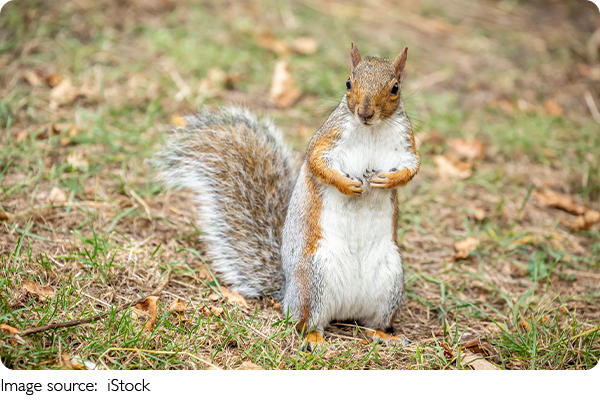
Squirrels may appear like playful creatures racing through trees, but their daily lives involve remarkable planning and memory. Their ability to store, protect, and recover thousands of food supplies shows a level of intelligence that is easy to overlook.