White Lions: 5 Facts!

Declan Kennedy
| 16-09-2026
 · Animal Team
Welcome back, Lykkers! Imagine seeing a lion walking across the grasslands with an almost snow-white coat. At first glance, it could look like a completely different kind of big cat.
But white lions are not a separate species; their unusual appearance comes from a genetic trait that reduces pigmentation. This rare coloration gives them one of the most striking appearances in the lion world.
Their pale coats have fascinated researchers, wildlife managers, and visitors for decades, especially in South Africa's Greater Timbavati region, where naturally occurring white lions have been documented. Yet the story behind their color is more complicated than simply calling them "rare white lions." Here are five fascinating facts that reveal what makes these animals so unusual.
How the ring-tailed lemur uses morning sunlight to warm itself and respond to changing environmental conditions
Why Does Lynx Have Ear Tufts? The Hidden Reasons Behind These Unique Ears Reveal Nature’s Amazing Design!
What can a mother and her cubs reveal about one remarkably adaptable bear?
A snug box feels like a tiny fortress, a warm nap spot, and a stress shield all at once
Understanding the annual growth cycle, social behavior, feeding patterns, and body language of Cervus elaphus
Chimpanzees can remember familiar faces after decades apart, showing a surprising social memory once thought unique to humans!
1. White Lions Are Still African Lions
The first fact is perhaps the most important: a white lion is still an African lion, scientifically known as Panthera leo. Its pale appearance does not place it in a separate species or subspecies.
The distinctive coloration is associated with leucism, a genetic condition that reduces pigmentation in the hair. Unlike albinism, leucism does not necessarily eliminate pigment throughout the body. A white lion can therefore retain normal pigmentation in its eyes, nose, and other tissues.
This distinction matters because white lions are sometimes incorrectly described as albinos. True albinism involves a much more extensive reduction or absence of melanin and commonly produces very pale eyes. White lions generally do not show those characteristics. Their unusual coat is therefore best understood as a variation in pigmentation rather than evidence of a different type of lion.
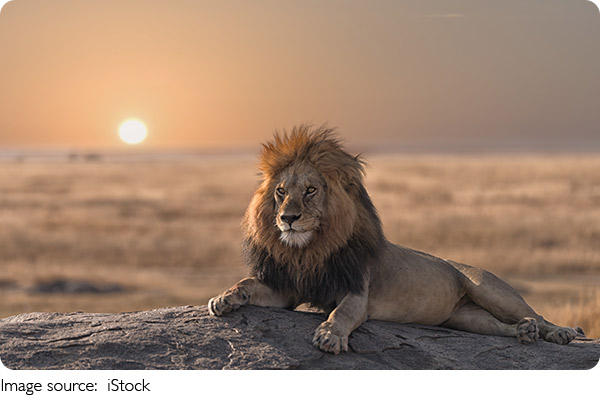
2. Their Famous White Coat Comes From Recessive Genetics
The striking color of a white lion is connected to a recessive genetic trait. This means a cub can inherit the relevant variant from both parents without either parent necessarily having a white coat. In simple terms, two normally colored lions can carry the genetic variant associated with lighter pigmentation.
If a cub inherits the appropriate copies, it can develop the pale coloration. This helps explain why white lions can appear unexpectedly within lion populations. Their presence does not necessarily mean that both parents must visibly look white. Genetics also explains why breeding white lions requires careful consideration.
When people deliberately breed animals to produce unusual appearances, repeatedly selecting for a rare trait can reduce genetic diversity if the breeding population becomes too restricted. For conservation, maintaining a healthy and genetically varied lion population is more important than producing a particular coat color.
3. The Timbavati Region Is Closely Associated With Them
White lions have a particularly strong connection with the Timbavati region of South Africa, where naturally occurring white individuals have been reported for generations. Historical accounts and later observations helped establish the region's reputation for these unusual lions.
The association became especially well known after white lion sightings attracted scientific and public attention during the twentieth century. The Timbavati landscape is part of the larger Greater Kruger ecosystem, an extensive conservation area where lions share habitat with prey such as impala, buffalo, zebra, and wildebeest.
This geographic connection is important because white lions are not simply a product of captivity. Naturally occurring individuals have existed in wild populations, although sightings are uncommon. Their rarity in the wild also makes every documented animal valuable to researchers studying pigmentation, inheritance, behavior, and population dynamics.
However, it would be misleading to say that white lions cannot survive in the wild simply because they are easier to see. Lions rely on far more than camouflage when hunting. They can approach prey using vegetation, darkness, terrain, group coordination, and careful positioning. Their hunting success also depends on the behavior of the entire pride.
4. A White Coat Can Create a Camouflage Problem
A lion's coloration is not merely decorative. Coat color can influence how easily an animal blends into its surroundings. Typical African lions have coats ranging from pale beige to golden brown, which can provide useful camouflage among dry grass, woodland, and sandy terrain. A very pale or nearly white coat may be more noticeable in some environments, particularly when vegetation is darker or shadows are limited.
Young cubs may face greater challenges because concealment is especially important when they are small and vulnerable. A conspicuous coat could potentially make hiding more difficult in certain surroundings, although survival depends on many factors beyond pigmentation. That makes the white lion an interesting example of how one visible genetic trait can interact with a much larger ecological system.
5. White Lions Have Become Part of a Conservation Debate
White lions occupy an unusual place between wildlife conservation and human fascination. Their appearance has made them highly desirable in some captive breeding programs, but this attention can create difficult conservation questions. Producing white lions for display is not the same thing as conserving wild lion populations.
A breeding program can increase the number of pale-colored animals without necessarily helping wild lions maintain healthy, connected populations. Conservation scientists generally place greater importance on habitat protection, prey availability, reducing human-wildlife conflict, preventing illegal killing, and maintaining genetically viable wild populations.
There is also a history of selective breeding for unusual coat colors in captivity. When breeding focuses heavily on appearance, closely related animals may sometimes be paired repeatedly to increase the chance of producing the desired trait. That approach can increase concerns about inbreeding and animal welfare.
For this reason, the white lion story is not simply about a beautiful animal. It also raises a larger question: should conservation focus on preserving an unusual appearance, or on protecting the ecological conditions that allow lions to survive naturally?
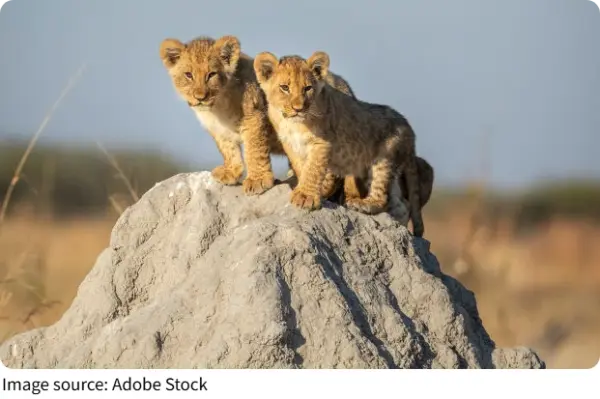
White lions reveal how genetics can produce an extraordinary appearance without creating a new species. Their coloration is associated with leucism, their inheritance involves recessive genetics, and their natural history is strongly linked with South Africa's Timbavati region.
10 Fascinating Facts About White Lions You Never Knew! 🦁✨
Curiosity For Life