Motorcycle Traffic Control

Owen Murphy
| 09-10-2026
 · Auto Team
Riding through crowded streets demands greater precision than traveling on an open road. Traffic can slow to walking pace, stop without warning, and leave limited room for adjustments.
Effective low-speed riding is built around controlled inputs, accurate observation, stable balance, and sufficient space. Rather than trying to move through traffic quickly, the priority is to maintain a predictable pace and remain prepared for changing conditions.
Select the Appropriate Gear
A suitable low gear makes it easier to manage slow traffic without constant shifting. On many manual motorcycles, first gear is appropriate for very low speeds and frequent stops, although the correct choice depends on the motorcycle and traffic conditions.
Why time, driving habits, and maintenance schedules matter when a vehicle is rarely driven
How to plan ride height, suspension, wheel fitment, alignment, and everyday usability
How to select a car color that balances personal style, maintenance, climate, and long-term ownership
How power delivery, steering, braking, suspension, tires, and chassis engineering shape the driving experience
A professional guide to washing, decontamination, polishing, protection, and long-term paint maintenance
How to match braking capacity, thermal control, and brake components to a higher-performance vehicle
Use a light throttle input and avoid unnecessary acceleration. If speed increases beyond the desired pace, reduce the throttle smoothly and apply controlled braking when required.
Master the Clutch Friction Zone
For motorcycles with manual clutches, understanding the friction zone is essential for precise low-speed control. This is the range where the clutch begins transmitting engine power to the rear wheel, allowing the motorcycle to move gradually.
Become familiar with this range in a quiet, suitable practice area before applying the technique in crowded traffic. Small clutch adjustments can then help regulate movement without relying on abrupt throttle changes.
The clutch should be operated progressively rather than held rigidly in one position. Its use should correspond with the motorcycle's speed and the surrounding conditions.
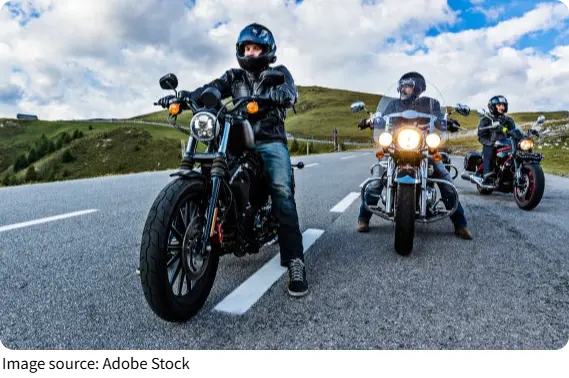
Balance Throttle, Clutch, and Brakes
Low-speed riding requires coordinated use of the primary controls. A light throttle can be combined with controlled clutch engagement and progressive braking to regulate movement.
The rear brake can be particularly useful during certain slow-speed maneuvers, while both brakes should be used appropriately when slowing or stopping. Brake application should remain smooth and deliberate.
When traffic stops completely, disengage the clutch and bring the motorcycle to a controlled stop. As movement resumes, select the appropriate gear and accelerate progressively.
Look Beyond the Vehicle Ahead
Good observation gives a rider more time to respond to changes in traffic. Instead of focusing exclusively on the vehicle immediately ahead, look farther into the traffic flow whenever possible.
This broader view can reveal slowing vehicles, changing gaps, and developing movement patterns earlier. Continue scanning the surrounding area while maintaining a stable riding position.
Effective visual awareness reduces the need for sudden reactions and supports smoother control.
Preserve a Useful Space Cushion
Maintaining adequate space gives the motorcycle room for controlled braking and steering adjustments. When conditions permit, avoid following so closely that an unexpected stop requires an abrupt response.
A practical gap also provides flexibility when traffic changes speed. Avoid entering spaces that leave insufficient room for adjustment, particularly when vehicles are moving unpredictably.
A consistent riding position and gradual corrections can make crowded conditions easier to manage.
Develop Skills Before Riding in Traffic
Low-speed control should be practiced before it becomes necessary in demanding traffic conditions. In a quiet and appropriate area, work on smooth starts, controlled stops, walking-speed riding, slow turns, clutch operation, and progressive braking.
Repeated practice helps build familiarity with the motorcycle's response to small control inputs. Once individual techniques become consistent, they can be combined into more complex low-speed maneuvers.
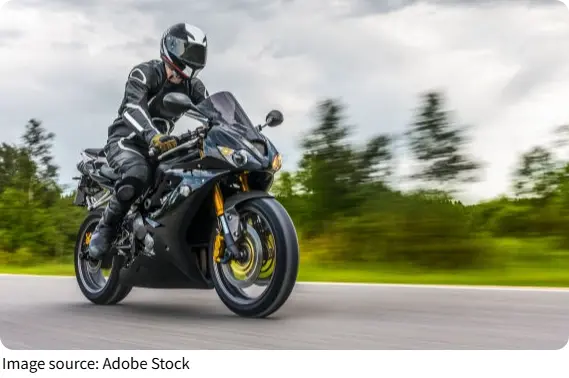
Crowded traffic requires precision rather than speed. Selecting an appropriate gear, managing the clutch friction zone, coordinating the brakes and throttle, scanning ahead, and preserving adequate space all contribute to controlled low-speed riding.
The objective is to make each input deliberate and predictable. With regular practice and disciplined observation, riders can approach slow-moving traffic with greater control and consistency.