Gemsbok Antelope Adaptations

Mukesh Kumar
| 10-11-2026
 · Animal Team
The gemsbok is one of the most recognizable antelopes of southern Africa. With its long horns, distinctive markings, and powerful build, it is well suited to life in dry, open landscapes.
Intense sunlight, limited water, and tough vegetation make survival challenging, yet this remarkable animal has evolved several strategies to cope with these conditions. Its physical features and daily habits reveal how wildlife adapts to demanding environments.

A Striking Appearance
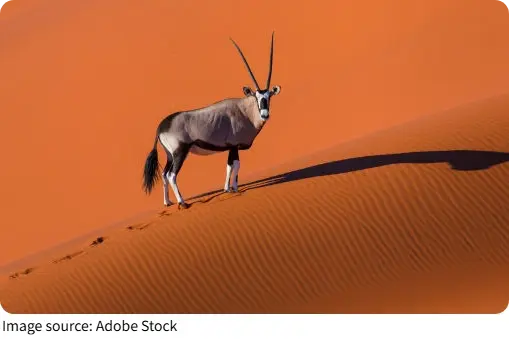
The gemsbok has a strong body, long legs, and a pale coat that contrasts with the reddish or sandy ground of its habitat. Dark markings on its face and legs create a distinctive pattern, while its long horns give it an unmistakable silhouette.
How Springboks Leap High, Run Fast, and Survive in Dry African Landscapes With Remarkable Natural Adaptations
How Lions Hunt in Darkness: The Remarkable Nighttime Abilities That Help These Powerful Cats Find Their Prey
Why Do Rhinos Love Mud Baths?
Tiny body, huge personality! See the surprising traits that make Yorkshire Terriers so special
Animals often remember far more than we'd expect
Why Does the Pelican Have Such a Huge Beak? Discover the Amazing Survival Skills Behind Its Unique Design
Both males and females have horns. These are important during interactions between members of the same species, particularly when individuals compete for space or social position. The horns can also provide protection, although the animal relies on more than physical strength to respond to danger. Its alert senses, speed, and ability to move across open terrain are equally valuable.
Managing the Desert Heat
One of the gemsbok's most interesting adaptations is its ability to tolerate high body temperatures. During hot weather, its body temperature can rise considerably, reducing the difference between its body and the surrounding air. This helps limit the amount of heat it absorbs from the environment.
The gemsbok also has a specialized network of blood vessels that helps regulate the temperature of blood reaching the brain. Air passing through the nasal passages cools nearby blood vessels, helping regulate body temperature even when the surrounding air becomes extremely warm.
These adaptations are especially useful in open habitats where shade is limited. However, heat tolerance does not make the animal immune to harsh conditions. Choosing sheltered resting places and adjusting activity levels remain important parts of its daily routine.
Finding Food in Dry Landscapes
The gemsbok feeds on grasses, leaves, and other available plant material. Its diet changes with seasonal conditions and the vegetation in its surroundings.
When surface plants become scarce, the animal can use its strong front legs and hooves to disturb the ground and reach buried plant parts, including roots. This ability gives it access to additional food during dry periods.
Some plants provide moisture as well as nourishment, allowing the gemsbok to obtain part of its water through feeding. Under suitable conditions, it can survive extended periods without drinking. However, its water requirements depend on temperature, activity, and the moisture available in its food.
A Daily Rhythm Built Around Heat
Gemsboks often adjust their activity to avoid unnecessary exertion during the hottest hours. They may rest in sheltered locations and become more active during cooler periods.
Early morning and late afternoon can offer better conditions for moving between feeding areas. During these hours, the animal can search for vegetation while reducing the strain caused by intense sunshine.
Its movements also depend on the availability of food, water, and suitable resting places. When resources are spread across a wide area, endurance becomes particularly important. The gemsbok can travel considerable distances while searching for what it needs.
Speed, Awareness, and Survival
Despite its solid build, the gemsbok can run at speeds of approximately 60 kilometers per hour. This ability helps it move quickly across open ground when danger appears, although recognizing threats early is equally important.
Its long horns serve several purposes, including defense and competition between individuals. Survival depends on a combination of strength, awareness, efficient movement, and the ability to remain alert while feeding.
Large predators, including lions, can threaten gemsboks. Open terrain provides room to run but may leave them exposed. Staying aware of their surroundings is therefore essential, especially when sheltered places are limited.
Final Thoughts
The gemsbok shows how physical adaptations and everyday behavior work together to support survival in dry environments. Its heat tolerance, flexible diet, water conservation, and endurance help it cope with limited resources.
Rather than relying on one remarkable feature, this antelope benefits from several adaptations that complement one another. Learning about the gemsbok offers a fascinating look at how wildlife responds to environmental challenges and thrives in demanding landscapes.
Gemsbok: Oryx Species Which Are The Ultimate Survivor of the Desert! 🏜️🦌
Video by Wildlife Pedia English