New Safety Leaders Arrive

Amit Sharma
| 08-10-2026
 · Auto Team
Modern vehicles are being designed to do much more than protect occupants after a collision. New safety assessments increasingly examine how well a car can help prevent an accident, respond to hazards, and protect people when an impact does occur.
Recent testing of several new models shows how quickly these technologies are becoming standard parts of vehicle development, while also revealing that safety performance can vary depending on the equipment fitted to each version.
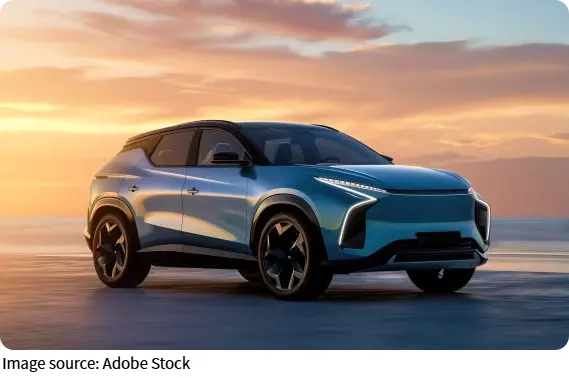
Safety Goes Beyond Crash Protection
Traditional vehicle safety has focused heavily on what happens during a crash. Strong passenger compartments, airbags, seat belts, and carefully engineered structures remain essential, but today's vehicles are also expected to help avoid collisions in the first place.
Reliability matters when buying a car! See what to consider for dependable long-term ownership!
Ready for a used car? Compare reliable choices that offer comfort, value, safety, and performance!
A used car can offer major savings, but condition and ownership costs deserve careful attention!
What makes a car truly safe? See which 2026 models stand out in crash and safety testing!
How often are phones involved before crashes? New research suggests official reports miss cases!
Does police presence change driver behavior? See how it may affect safety around work zones!
Modern assessment programs therefore examine technologies such as automatic emergency braking, lane-support systems, driver monitoring, and features designed to recognize potential hazards. The goal is not to replace the driver, but to provide additional assistance when a dangerous situation develops.
Three Models Deliver Strong Results
Recent testing produced particularly strong results for the AION UT, GEELY E2, and Leapmotor B05. All three achieved the highest overall rating under the latest assessment requirements.
The AION UT performed well in several areas, including crash protection and post-crash safety. Its safety package includes a wide selection of collision-avoidance technologies. However, the assessment also identified areas where the vehicle could improve, including speed-limit recognition and the lack of a system designed to alert the driver if a child is left inside the vehicle.
The Leapmotor B05 also demonstrated strong performance. Its automatic emergency braking system handled several demanding situations effectively, including higher-speed scenarios and junction-related hazards. During crash evaluations, the vehicle achieved maximum results in some side-impact assessments, while its center airbag provided additional protection.
Optional Equipment Can Change Results
One of the clearest lessons from the latest evaluations is that the safety rating of a vehicle can depend on its specification. The CUPRA Raval illustrates this point. In its standard configuration, the small electric car received four stars. When equipped with an optional Safety Pack, its overall result increased to five stars.
The additional equipment improved performance in active safety testing, particularly in situations involving lower speeds and intersections. Its crash protection remained strong, while its post-crash safety performance was also high. For buyers, this is an important reminder that a vehicle's advertised safety rating may not tell the whole story. The exact version, trim level, and optional packages should be checked before making a purchasing decision.
Driver Assistance Is Under Greater Focus
Safety technology is becoming more sophisticated, but having a long equipment list does not automatically guarantee excellent performance. Testing now looks at how well individual systems function in specific situations. Automatic emergency braking, for example, may be assessed against different types of hazards, speeds, and road layouts. Lane-support technology can also be evaluated according to how effectively it helps keep the vehicle within its intended path.
Driver-monitoring technology is another growing area. These systems are intended to identify signs that a driver may not be paying sufficient attention and provide an appropriate warning. Such technologies are designed as support systems. Drivers remain responsible for paying attention, controlling the vehicle, and responding appropriately to changing road conditions.
Different Cars, Different Strengths
Other recent evaluations highlight why individual safety scores deserve attention. The Kia K4 achieved four stars with standard equipment and five when fitted with its optional Safety Pack. The Mercedes-Benz CLE Cabrio also achieved a five-star result, with its rating connected to the assessment of the related coupe model under an earlier testing procedure.
These examples show that safety results cannot always be compared simply by looking at star ratings. Testing procedures, vehicle specifications, and available equipment can all influence the final result.
What Buyers Should Look For
For shoppers, the most useful approach is to examine the details behind an overall rating. Check which safety features are included as standard and which require an additional package. It is also worth considering individual results for crash protection, collision avoidance, and post-crash performance.
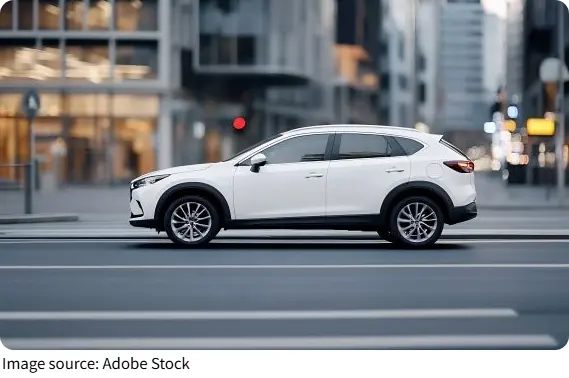
Vehicle safety is moving toward a more comprehensive approach that considers what happens before, during, and after a collision. For buyers, the key is to look beyond a single rating. Examining the exact equipment and individual safety results can provide a much clearer picture of what a particular vehicle offers.